
215 Missing Children's families have already received 1.9 Billion dollars in compensation?
- Justin Plosz
- Jun 2, 2021
- 3 min read

Updated: Jul 6, 2021
The Indian Residential Schools Settlement Agreement (IRSSA) is an agreement between the Government of Canada and approximately 86,000 Indigenous peoples in Canada who at some point were enrolled as children in the Canadian Indian residential school system, a system which was in place between 1879 and 1996.[1]:1 The IRSSA recognized the damage inflicted by the residential schools and established a $1.9-billion compensation package called CEP (Common Experience Payment) for all former IRS students.[2][3] The agreement, announced in 2006, was the largest class action settlement in Canadian history.[1]:1 As of March 2016 a total of $1,622,422,106 has been paid to 79,309 former students.[4] An additional $3.174 billion has been paid out as of December 31, 2018, through IAPs (Independent Assessment Process) which are for damages suffered beyond the norm for the IRS.
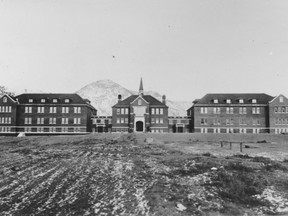
In November 1996 the Royal Commission on Aboriginal Peoples (RCAP) issued its final 4,000-page report with 440 recommendations. Indian residential schools were the topic of one chapter.[2] In 1998 in response to the RCAP the Canadian federal government unveiled Gathering Strength: Canada's Aboriginal Action Plan,[9]:3 a "long-term, broad-based policy approach in response to the Royal Commission on Aboriginal Peoples which included the "Statement of Reconciliation: Learning from the Past," in which the "Government of Canada recognizes and apologizes to those who experienced physical and sexual abuse at Indian residential schools and acknowledges its role in the development and administration of residential schools."[10]
In 2001, the federal Office of Indian Residential Schools Resolution Canada was created to manage and resolve the large number of abuse claims filed by former students against the federal government. In 2004, an Assembly of First Nations Report on Canada’s Dispute Resolution Plan to Compensate for Abuses in Indian Residential Schools led to discussions to develop a holistic, fair and lasting resolution of the legacy of Indian Residential Schools.[11]
The law firm of Regina, Saskatchewan lawyer, Tony Merchant, Q.C.—Merchant Law Group LLP—represented over 7,000 survivors—approximately 50 per cent of "all known" residential school survivors in Canada" who had pursued class action lawsuits" against the Canadian federal government .[12] Following the publication of the 1996 Royal Commission on Aboriginal Peoples report, residential school survivors met across the country at gatherings, also attended by Tony Merchant, who became a "familiar figure", signing up thousands of survivors for a class action law suit.[13] MLG lawyers received "nothing until a class action settlement was secured" in a legal fees agreement that was settlement-driven.[13] David Blott's Calgary, Alberta-based law firm "handled almost 4,600 residential school claims."[14]
On November 20, 2005, an agreement in principle was reached by the negotiating parties which included Canada, as represented by Frank Iacobucci, a retired Supreme Court of Canada Justice, the plaintiffs' representative—the National Consortium and the Merchant Law Group (MLG), independent Counsel, the Assembly of First Nations, Inuit representatives, the General Synod of the Anglican Church of Canada, the Presbyterian Church in Canada, the United Church of Canada, and Roman Catholic Entities for the "resolution of the legacy of Indian Residential Schools."[15]
On 23 November 2005 the Canadian federal government announced the IRSSA compensation package.[2] It represents the largest class-action lawsuit in Canadian history. On 11 June 2008, Prime Minister Harper "apologized on behalf of the Government of Canada, and all Canadians, for the forcible removal of Aboriginal children from their homes and communities to attend Indian residential schools. In this historic Apology, the Prime Minister recognized that there is no room in Canada for the attitudes that created the residential school system to prevail."[16]
In Regina, Saskatchewan, on December 15, 2006, Justice Dennis Ball, approved the "settlement of class and individual residential school claims" under the IRSSA.[17]
Source:
https://en.m.wikipedia.org/wiki/Indian_Residential_Schools_Settlement_Agreement


Comments